San Diego Towing Questions, Answered
Costs, response times, impound releases, flatbed transport and dealer accounts — the answers people actually call us about, grouped so you can jump straight to yours.
Find your answer fast
Seven sections. Tap the one you need.
General Questions
7 questions
Costs & Payment
7 questions
Emergency & Accidents
6 questions
Flatbed & Specialty
6 questions
Impound & Release
6 questions
Dealer & Fleet
5 questions
Service Areas
5 questions
General Questions
General Towing Questions
The basics: who we are, what we tow, how to reach us, and what happens after you call.
How do I get a tow truck in San Diego right now?
Call (619) 246-1708. Tell the dispatcher your location, the make and model of your vehicle, and what is wrong with it. That is enough to send the right truck. If you are on a freeway shoulder, say so first — those calls get prioritized because you are exposed to traffic. We answer 24 hours a day, every day of the year.
How long has Ramirez Towing been in business?
Since 1996. That is roughly 30 years of towing across San Diego County under the same name, which matters more in this trade than it sounds. Towing is a business people enter and exit quickly. A company that has run the same routes for three decades knows which freeway shoulders are dangerous, which impound lots close early, and which repair shops will actually take a drop-off after hours. You can read more about our history.
What kinds of vehicles do you tow?
Passenger cars, trucks, SUVs, vans, motorcycles, classic and lowered vehicles, non-running vehicles, and accident-damaged vehicles. We run both wheel-lift and flatbed equipment, so the vehicle determines the truck rather than the other way around. See the full list on our towing service page.
Are you available 24 hours a day?
Yes. Breakdowns do not keep business hours, so neither do we. Dispatch runs 24/7, including nights, weekends, and holidays. Late-night and holiday calls may carry a higher rate — ask when you call and the dispatcher will tell you before a truck is sent.
What should I do while I wait for the tow truck?
Get yourself somewhere safe first, then worry about the car. If you are on a freeway, pull as far onto the right shoulder as you can, turn on your hazards, and stay in the vehicle with your seatbelt on unless there is a fire or a fuel leak. Standing beside a car on a San Diego freeway shoulder is one of the most dangerous things you can do. We wrote a full guide on how to safely wait for a tow truck at night.
Do I have to be with my vehicle when it gets towed?
Usually yes, at least to hand over the keys and confirm where the vehicle is going. There are exceptions — a dealership transfer, a vehicle already at a shop, or a car being moved out of storage can often be arranged without you present, as long as whoever controls the property authorizes the release. Call and explain the situation and we will tell you what we need.
What should I ask before hiring any towing company?
Ask four things: what the total cost will be including hook-up and mileage, roughly how long the truck will take, whether the company is licensed and insured, and whether they run the equipment your vehicle actually needs. A company that will not answer the first question over the phone is telling you something. We covered this in detail in questions to ask before hiring a tow company.
Costs & Payment
Towing Costs & Payment
What a tow actually costs in San Diego, what drives the price up, and how billing works.
How much does a tow cost in San Diego?
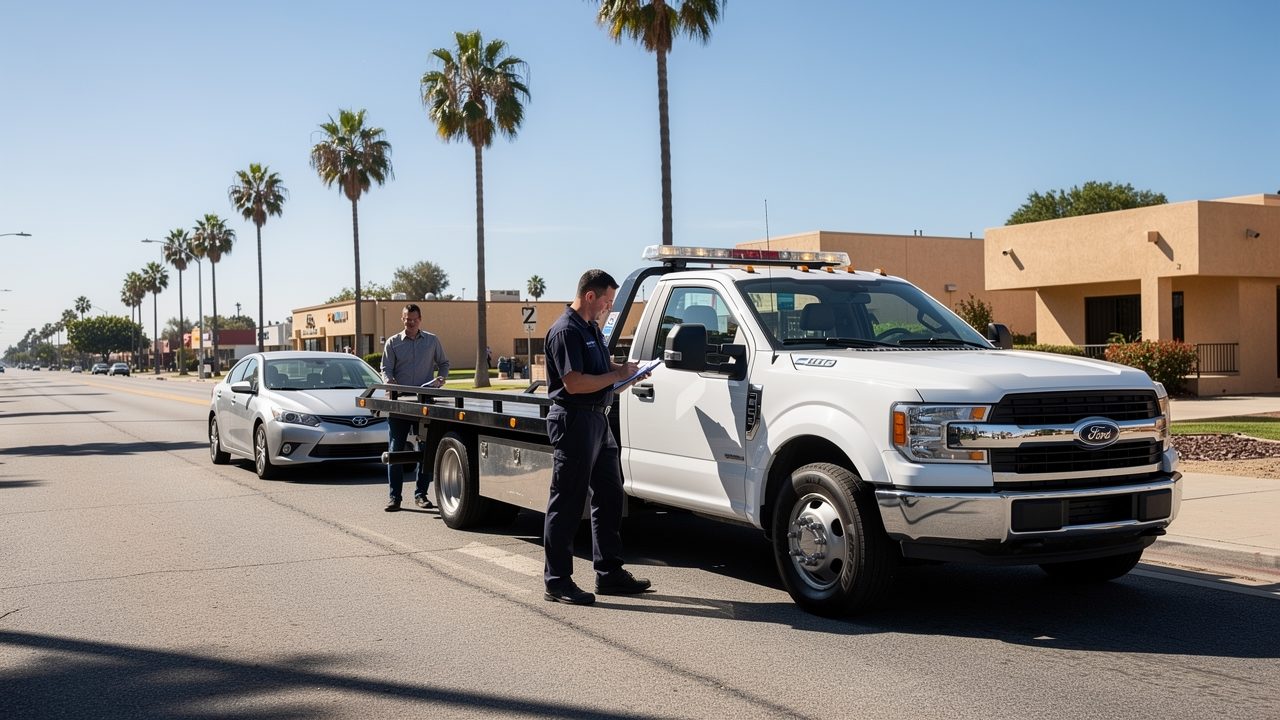
Most local tows in San Diego run a hook-up fee of roughly $75 to $125, plus about $4 to $7 per mile. A typical short local tow of 5 to 10 miles usually lands somewhere in the $100 to $200 range. Those are typical San Diego market figures, not a quote — the real number depends on your vehicle, distance, time of day, and how difficult the recovery is. Call (619) 246-1708 and we will give you an actual price before we dispatch. Our full breakdown is in how much towing costs in San Diego.
What makes a tow cost more?
Five things, mostly. Distance is the big one, since mileage is charged per mile beyond the hook-up. After that: flatbed service costs more than a wheel-lift because the equipment costs more to run; overnight, weekend, and holiday calls carry higher rates; a vehicle that has to be winched out of a ditch, a soft shoulder, or a parking structure takes extra labor; and oversized or heavily damaged vehicles need bigger equipment.
Will you tell me the price before you send a truck?
Yes. Give the dispatcher your pickup location, your drop-off location, and your vehicle's make and model, and you will get a price before anything is dispatched. We would rather lose a call to a cheaper competitor than surprise someone with a bill on the roadside. If a towing company will not price your job on the phone, keep calling around.
What payment methods do you accept?
Major credit and debit cards and cash. Confirm your preferred method with the dispatcher when you call, especially for a long-distance move or a multi-vehicle job, so there are no surprises when the driver arrives.
Does my car insurance cover towing?
Sometimes. Many California policies include towing and labor as an optional add-on, and roadside assistance memberships often cover a set number of miles per year. Coverage varies widely, so check your declarations page or call your insurer before you assume you are covered. Ask your insurer what your policy actually includes before you need it.
Can you bill my insurance company directly?
It depends on the insurer and the claim. On accident recovery jobs, insurance billing is often arranged as part of the claim. On routine breakdowns, most customers pay at the time of service and submit the receipt for reimbursement. Tell the dispatcher you are working through insurance and we will tell you what is possible on your particular claim.
Is a flatbed tow more expensive than a regular tow?
Yes, typically. Flatbed trucks cost more to buy, run, and maintain, and the job takes longer because the vehicle has to be winched onto the deck and strapped down properly. For a lot of vehicles it is not optional — a lowered car, an all-wheel-drive vehicle, or a car with a damaged wheel can be made much worse by the wrong tow. The extra cost is cheaper than a transmission. More on our towing service page.
Emergency & Accidents
Emergency & Accident Recovery
Breakdowns, collisions, freeway shoulders, and what to do in the first ten minutes.
My car broke down on the freeway. What do I do first?
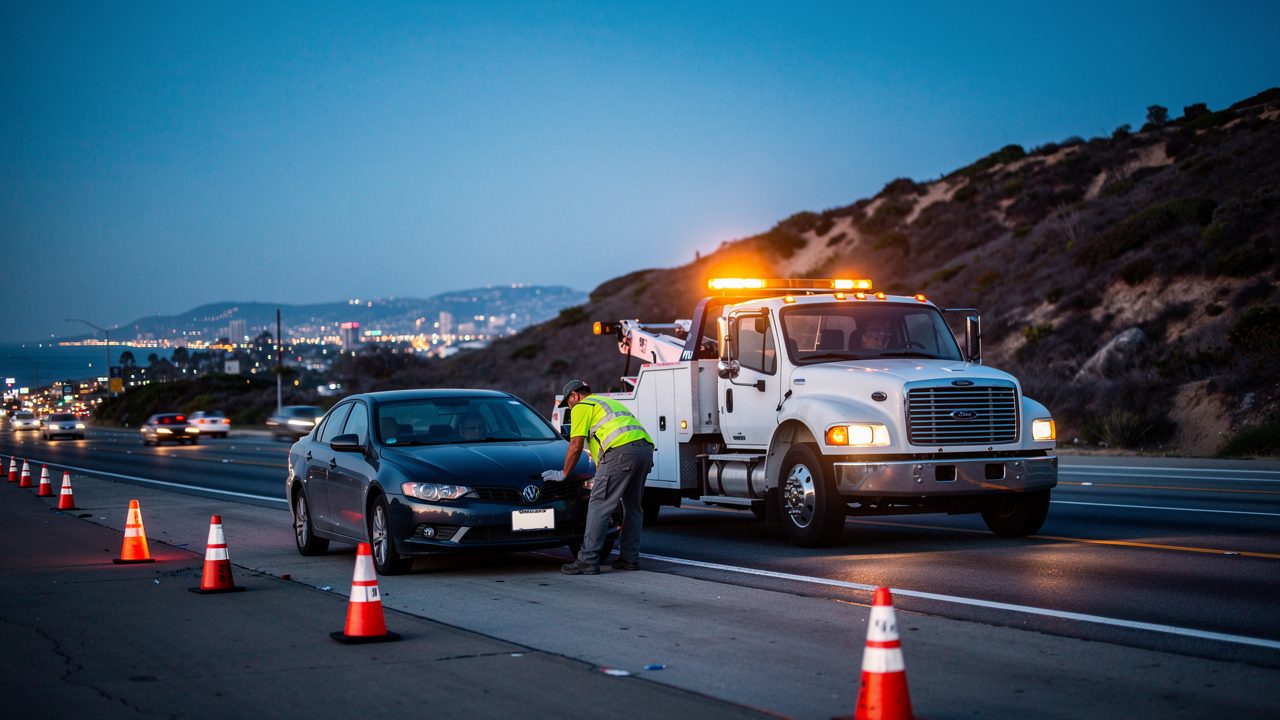
Signal, get as far onto the right shoulder as you safely can, and turn on your hazard lights. Stay in the vehicle with your seatbelt fastened unless you smell fuel or see smoke. Then call for a tow and give your direction of travel and the nearest exit or mile marker — that is what gets a truck to you fastest. Do not attempt repairs on a live traffic shoulder. Full guidance in what to do when your car breaks down on a San Diego freeway.
How fast can you get to me?
It depends on where you are and what traffic is doing. Within the central San Diego corridor, response is often well under an hour. Outbound areas like Escondido or the eastern county can take longer, and rush hour on the I-5 or I-8 changes everything. The dispatcher will give you a realistic estimate when you call, not an optimistic one.
I was in an accident. When should I call a tow company?
After you have checked for injuries, moved out of traffic if the vehicle is drivable, and called the police if anyone is hurt or the vehicles cannot be moved. Once the scene is under control, call for a tow. If law enforcement is on scene, they may direct a rotation tow instead — you can usually still request your own company for a non-rotation tow. See when to contact a tow company after an accident.
Can you tow a car that will not start or is badly damaged?
Yes. Non-running and accident-damaged vehicles are routine work. Vehicles that will not roll, steer, or hold a wheel go on a flatbed and get winched aboard. Tell the dispatcher what is broken — whether the wheels turn, whether it steers, whether there is body damage against a tire — so the right truck and equipment come out the first time.
Do you handle lockouts, jump starts, flat tires, and fuel delivery?
Yes, roadside assistance is part of what we do across San Diego County. These calls are often faster and cheaper than a full tow, so it is worth describing the problem accurately when you call. If a jump start will not hold or the spare is also flat, the driver can convert the call to a tow on the spot.
Can you recover a vehicle that has gone off the road?
Yes. Winch-outs and off-road recovery are part of our work — vehicles in ditches, soft shoulders, sand, or down an embankment. These jobs take specialized equipment and more time than a standard tow, and they price accordingly. Describe the terrain and how far off the road the vehicle sits so we bring the right rig.
Flatbed & Specialty
Flatbed & Specialty Vehicle Transport
Classics, lowered cars, motorcycles, AWD, and anything that should never be dragged on two wheels.
When do I need a flatbed instead of a regular tow truck?
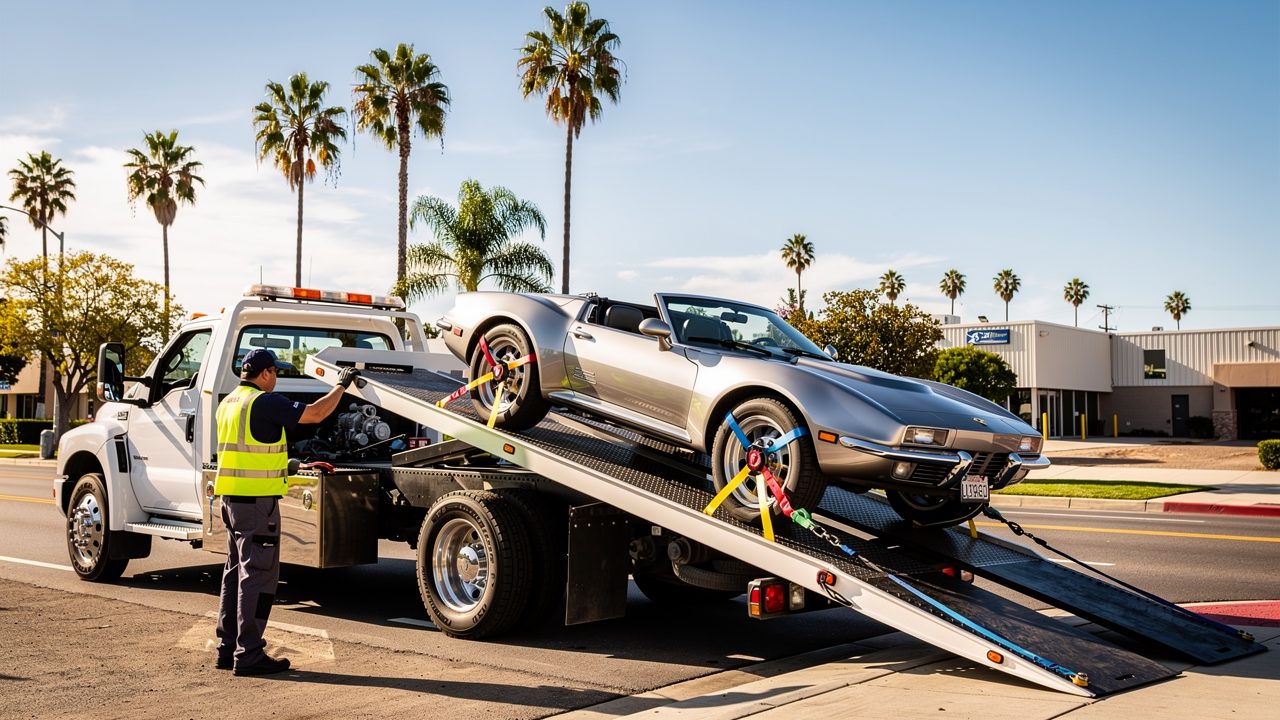
Whenever the vehicle should not roll on its own wheels. That covers all-wheel-drive and four-wheel-drive vehicles, lowered or low-clearance cars, classic and collector cars, vehicles with transmission damage, vehicles with a damaged or missing wheel, and most motorcycles. A flatbed keeps all four wheels off the ground, which is the only way to guarantee the tow itself does not add damage.
Can you tow a lowered or modified car without scraping it?
Yes. Lowered cars need a flatbed with a low approach angle, and often ramps or wood blocks to reduce the break-over angle at the top of the deck. Tell the dispatcher the ride height and any front lip or splitter when you call. It takes an extra minute on the phone and saves your bodywork.
Do you tow motorcycles?
Yes. Motorcycles go on a flatbed and get secured with soft straps and a wheel chock, never chained by the frame or the handlebars. A bike towed carelessly arrives with bent forks or a scratched tank, so it is worth confirming that whoever you call actually carries motorcycle tie-down equipment before they show up.
Can you transport a classic or collector car?
Yes, and it is work we take seriously. Classic and collector vehicles go on a flatbed with soft straps at the wheels rather than chains on the frame or suspension, and drivers document condition before loading. Older cars often have brittle trim, fragile paint, and non-standard tie-down points, so tell us what we are picking up in advance.
Can you move a vehicle in and out of long-term storage?
Yes. Storage moves are a regular part of our work — cars that have not run in years, project vehicles, and inherited vehicles being consolidated. These often need a flatbed and sometimes a winch, since tires may be flat and brakes may be seized. More on this in moving old cars in and out of storage.
Do you tow oversized trucks, vans, or box trucks?
Often, yes, but it depends on the weight and dimensions. Give the dispatcher the vehicle's gross weight, length, and whether it is loaded. Heavier equipment is a different class of truck, and knowing the numbers up front prevents a wasted dispatch and a second bill.
Impound & Release
Impound & Vehicle Release
Getting a vehicle out of impound in San Diego: what you need, what it costs, and how the clock works.
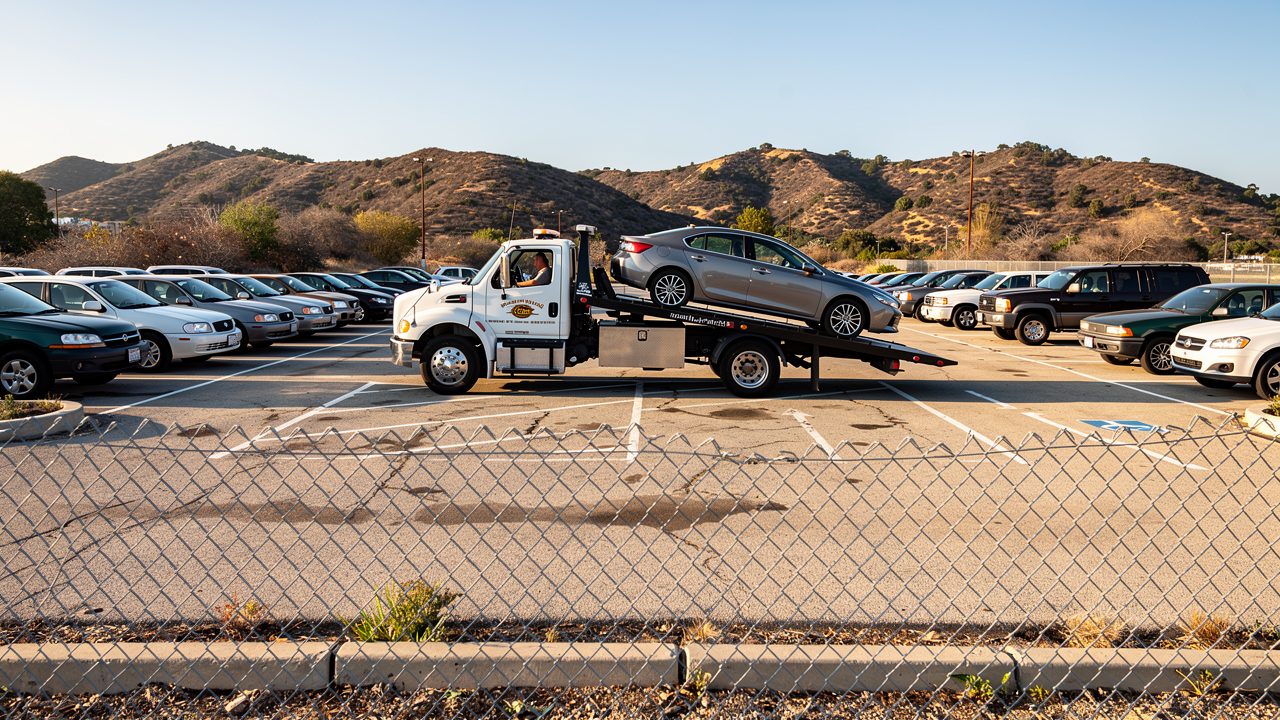
How do I get my car out of impound in San Diego?
You generally need three things: proof you own the vehicle, a valid driver's licence, and payment for the accumulated fees. Depending on why the vehicle was impounded, you may also need a vehicle release form from the law enforcement agency that ordered the tow. Call the storage facility first and confirm exactly what they require and what their hours are — showing up with the wrong paperwork costs you another day of storage fees. Our step-by-step guide is at how to get your car out of impound in San Diego.
What documents do I need to release an impounded vehicle?
Typically the vehicle title or registration in your name, a valid photo ID or driver's licence, proof of current insurance, and a police release form when the impound was law-enforcement-ordered. If the registered owner cannot come in person, most facilities require a notarized authorization letter. Requirements differ by agency and by lot, so confirm on the phone before you drive over.
How much do impound storage fees cost?
Storage is charged per day and accrues from the moment the vehicle arrives, so the total climbs whether or not the lot is open. Between the initial tow, an administrative release fee, and daily storage, an impound left sitting for a week can cost considerably more than the tow itself. The single most effective thing you can do is retrieve the vehicle quickly.
Can I get my personal belongings out of an impounded car?
Usually yes. California generally allows an owner to retrieve personal property from an impounded vehicle during business hours, even when the vehicle itself is not yet released. Bring your ID, call ahead to confirm the lot's policy and hours, and expect to be escorted. Property attached to the vehicle is usually treated differently from loose belongings.
What happens if I leave my car in impound too long?
It gets expensive, then it gets sold. Storage fees accumulate daily, and once the total exceeds what the vehicle is worth, most owners walk away. After the statutory period, the facility can initiate a lien sale and dispose of the vehicle at auction. If retrieving it is not realistic, call the lot and ask about your options rather than letting the clock run.
Can you tow my car from the impound lot to a shop or my home?
Yes. Once the vehicle is released, we can pick it up from the storage facility and deliver it to a repair shop, your home, or a dealership anywhere in San Diego County. Arrange the release first, then call us with the lot address and the destination.
Dealer & Fleet
Dealer, Fleet & Auction Transport
Business accounts: dealership transfers, fleet support, auction runs, and long-distance moves. Full detail on our dealer and fleet towing and long-distance towing pages.
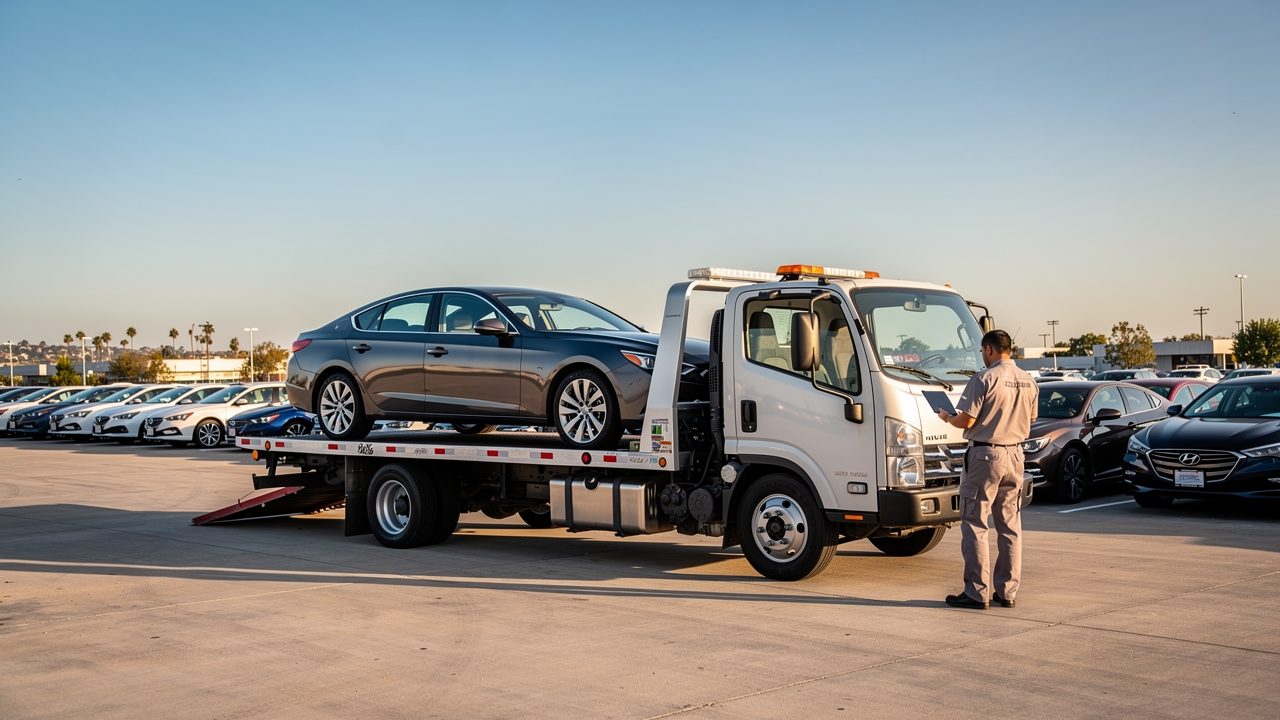
Do you work with auto dealerships and repair shops?
Yes. Dealer transfers, trade-in pickups, auction runs, and shop-to-shop moves are steady work for us across San Diego County. Business accounts get scheduled pickups rather than emergency dispatch, which means predictable timing and simpler billing. Call (619) 246-1708 to set one up.
Can you support a commercial fleet?
Yes. Fleet work usually means recovering vehicles that go down mid-route and getting them to your preferred shop with minimum downtime. If you run vehicles in San Diego County and want a known number to call instead of searching each time, an account is worth setting up before you need it.
Do you handle auction vehicle transport?
Yes — pickups from auction sites to dealerships, shops, or storage. Auction vehicles are frequently non-running or have unknown mechanical condition, so these usually go on a flatbed. Give us the lot, the gate hours, and the vehicle condition and we will schedule around them.
How far will you tow a vehicle?
Well beyond San Diego County. Long-distance transport up and down California and into neighboring states is regular work, priced by mileage rather than the local hook-up structure. Long hauls should be booked in advance so the right truck and route are assigned. Details in long-distance towing from San Diego.
Can you move several vehicles at once?
Depending on the vehicles and the distance, yes — either with multiple trips or by scheduling several trucks. Dealership inventory moves and fleet relocations are best handled as a planned job rather than an emergency call. Tell us how many vehicles, whether they run, and your deadline, and we will build a schedule around it.
Service Areas
Service Areas & Response Times
Where we run, how long we take to get there, and the neighborhood pages with local detail.
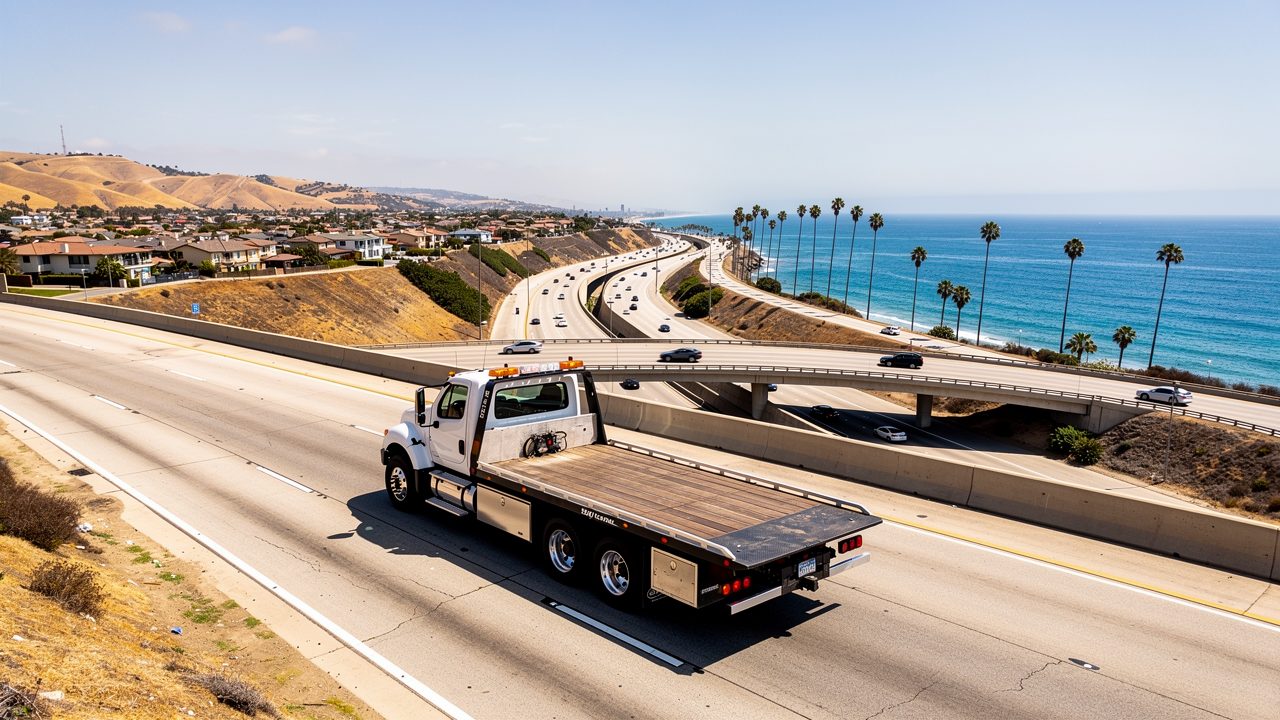
What areas of San Diego County do you serve?
All of it, plus long-distance runs outside the county. That includes the city of San Diego, the South Bay, East County, the coastal communities, and inland up through Escondido. Our service areas page lists every neighborhood with local detail, and the links below go straight to individual community pages.
How long does it take you to reach my neighborhood?
Central corridor neighborhoods — Downtown, Mission Valley, North Park, Kearny Mesa — are typically the quickest. Coastal areas like Pacific Beach and Point Loma and South Bay communities like Chula Vista and National City are close behind. El Cajon, Lemon Grove, and Escondido sit further out and take longer, especially at rush hour. The dispatcher gives you a real estimate for your actual location when you call.
Do you tow outside San Diego County?
Yes. We run long-distance transport up and down California and into neighboring states. These jobs are priced by distance and should be booked ahead rather than called in as an emergency, so the right truck and driver are assigned to the route.
Do you charge more for outlying areas?
Mileage is part of every quote, so a pickup further from our coverage centre generally costs more than one nearby — but the price is quoted up front either way. There is no separate surcharge you find out about afterward. Ask for the total when you call.
Can I schedule a tow in advance instead of calling in an emergency?
Yes, and it is usually cheaper and smoother. Scheduled tows are common for storage moves, project cars, dealership transfers, pre-purchase inspections, and vehicles that have been sitting. Call (619) 246-1708 or use our contact form to set a time.
Towing by neighborhood
Every community we cover has its own page with local response detail. Not listed? We still come — call and ask.
Still have a question? Just call.
Dispatch answers 24 hours a day, every day. Tell us where you are and what the vehicle is doing, and you will get a straight price before a truck rolls.
Prefer to write? Send us a message or email info@ramireztowingsd.com.