 What Car Impound Means — and Why You Need to Act Immediately
To retrieve car from impound San Diego, you need to move the moment you find out. Storage fees start the instant your vehicle arrives at the lot — not from when you discovered it was gone. A two-day delay can easily add $100–$150 to your bill before you’ve made a single call. Ramirez Towing San Diego has helped vehicle owners work through how to get car out of impound San Diego since 1996, and this guide covers the full process from first contact to getting your keys back.
California law requires the towing company or law enforcement agency that ordered the tow to notify the registered owner within one business day (California Vehicle Code Section 22850.3). If you haven’t received notice but suspect your car was towed, don’t wait — start making calls immediately.
Step One: Find Out Where Your Car Is
If law enforcement ordered the tow — after a traffic stop, accident, parking violation, or expired registration — your first call is to the San Diego Police Department non-emergency line at (619) 531-2000. They can confirm which San Diego impound lot has your vehicle and who ordered the tow. For unincorporated areas of the county, contact the San Diego County Sheriff’s Department instead.
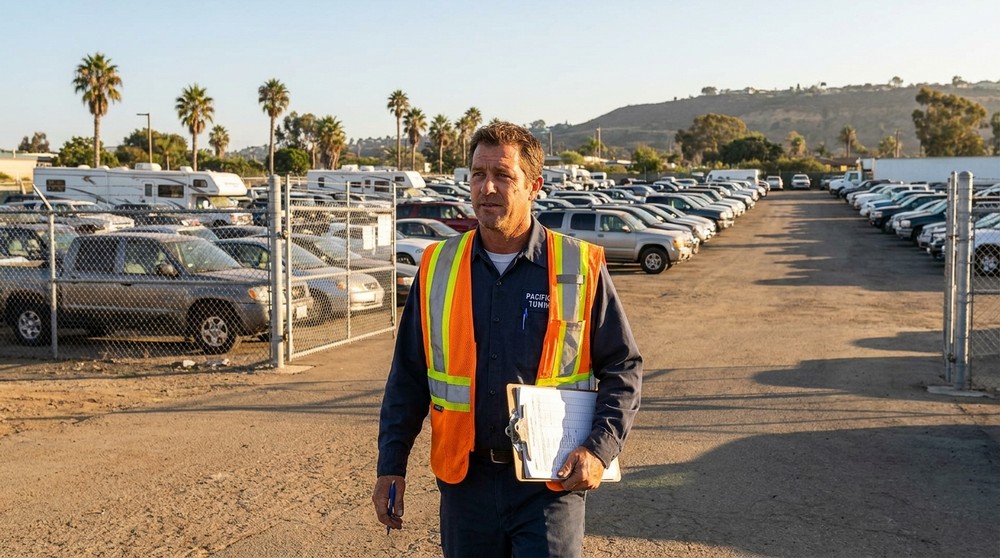
Once you have the lot’s name and address, call them directly. Confirm the vehicle is there, ask for the current total charges, and find out their release hours. Many San Diego impound lots operate Monday through Friday only — calling ahead prevents a wasted trip and an extra day of storage fees.
What Documents You Need for Release
- Valid government-issued photo ID: Must match the registered owner’s name. If you’re not the owner, bring a signed authorization letter from the owner plus a copy of their ID.
- Current vehicle registration or title: A current registration is typically sufficient for impound release San Diego facilities require in standard cases.
- Proof of valid insurance: Required for most police-ordered tows in California. Bring your insurance card or ask your insurer to email a current binder before you arrive.
- Payment: Cash, credit, or debit depending on the lot. Call ahead to confirm — personal checks are rarely accepted at any San Diego impound lot.
If the vehicle is registered in someone else’s name, the registered owner typically needs to appear in person or provide notarized authorization. Confirm requirements with the lot before you go — arriving without the right paperwork means another day of fees and another wasted trip.
Impound Fees and Daily Storage Costs in San Diego
Car impound San Diego costs break into two parts: the initial tow fee and ongoing daily storage. The tow fee covers moving the vehicle to the lot — typically $150 to $300 depending on vehicle size, distance, and whether after-hours service was involved. Impound fees San Diego drivers pay at the lot are separate and start the moment the vehicle arrives.
Daily storage at most San Diego impound facilities runs $50 to $75 per day. A car sitting in the lot for five days could carry $300–$375 in storage alone, on top of the original tow charge. Move quickly. Get Help Now from Ramirez Towing if you need the vehicle transported after release — we can often move it the same day.
The 30-Day Limit: What Happens If You Wait Too Long
California law permits impound lots to file for a lien sale — auctioning your vehicle — after 30 days of non-retrieval. The process starts well before that mark once notification and administrative processing time are factored in. If you can’t pay the accumulated fees yet, contact the lot directly, document every conversation, and ask whether a payment arrangement is possible. Lots are not required by law to offer one, but many will rather than process a lien sale.
When Impound Retrieval Gets More Complicated
A suspended driver’s license at the time of the stop can trigger a mandatory 30-day hold under California Vehicle Code Section 14602.6. During this hold, the registered owner cannot retrieve the vehicle even with full documentation and payment cleared. In some cases, a designated licensed driver can be authorized to pick up the vehicle — but this requires specific paperwork and approval from the citing agency.
Vehicles with out-of-state plates, expired registration, or unclear title add steps to the process. Outstanding DMV holds or delinquent registration fees must often be resolved with the DMV before any San Diego impound lot will authorize release. Ramirez Towing has worked through complex vehicle retrieval situations across San Diego County for nearly three decades — call us if you’re not sure where to start.
How Ramirez Towing Helps After Your Vehicle Is Released
Once you’ve secured legal release of your vehicle from the lot, you may need it moved to a repair shop, your home, or a dealership — especially if it isn’t drivable. Ramirez Towing can meet you at the impound lot, load the vehicle, and get it where it needs to go the same day in most cases. San Diego County’s geography means getting a car from one part of the county to a shop in another often requires a professional flatbed, not a rideshare.
Call Ramirez Towing at (619) 246-1708 before you arrive at the lot so we can confirm availability and quote the transport. Serving all of San Diego County since 1996.
Frequently Asked Questions About Car Impound in San Diego
How much does it cost to get a car out of impound in San Diego?
A typical two-day impound totals $250 to $450 — the initial tow fee ($150–$300) plus two days of storage ($100–$150). Costs rise sharply after five or more days. Retrieving your vehicle as quickly as possible is always the financially sound decision.
Can someone other than the registered owner pick up an impounded vehicle?
Yes, with documentation. The registered owner must provide a signed authorization letter and a copy of their ID. The person picking up must have a valid driver’s license, and proof of current insurance in the owner’s name is required. Confirm exact requirements with the specific lot before making the trip.
What happens if I can’t afford to pay the impound fees?
Contact the lot directly and ask about payment arrangements — some facilities will work with you to prevent a lien sale. If fees have surpassed the vehicle’s market value, ask about voluntary abandonment procedures. Also check your auto insurance policy; some coverage includes reimbursement for impound-related expenses.
How long does a police-ordered impound hold last in San Diego?
Standard police impounds are released once proper documentation is presented and fees are paid. If your license was suspended at the time of the stop, a mandatory 30-day hold under California Vehicle Code Section 14602.6 applies. Only a designated licensed driver, with agency approval, may retrieve the vehicle during that period. Contact the citing agency to confirm your specific options.
Ready to Get Started?
Once your vehicle is cleared for release from the San Diego impound lot, Ramirez Towing can transport it anywhere in the county — often the same day. We’ve been helping San Diego drivers recover from tough situations since 1996.
Get Help Now or call us at (619) 246-1708.